
Signs of Problem Gambling for Beginners
A friend of mine in Pune started with ₹500 weekend bets on cricket. Eighteen months later he was hiding loan statements from his wife and borrowing against his bike. He never saw it coming—and that's the scary part. The signs of problem gambling rarely announce themselves. They creep in quietly, dressed up as harmless fun, until one day the math stops adding up and the lies start piling on.
I've spent years teaching people in India how betting and casino games actually work, and the questions I hear most often aren't about odds. They're whispered: "Is this normal? Am I in trouble?" This guide answers exactly that. You'll learn how to tell casual play from compulsion, the early warning signs of gambling addiction most people miss, how it wrecks your mental health, and—crucially—where to find real help in India.
★ Our Recommendations
| 150% up to ₹30,000 + 200 Free Spins | Play | ||
| Up to ₹30,000 + 250 Free Spins | Play | ||
| Up to ₹5,000 + 150 Free Spins | Play |



What Counts as Problem Gambling?
Problem gambling isn't about how much money you lose. It's about losing control. You can drop ₹2,000 a month and be fine, or lose ₹500 and find yourself unable to stop thinking about the next bet. The amount means nothing without context.
The clinical definition is simpler than people expect: gambling becomes a problem when it harms your finances, relationships, work, or mental health—and you keep doing it anyway. That last part is the giveaway. Awareness of damage paired with continued behaviour. That's the line between a hobby and a disorder.
Compulsive gambling sits at the severe end. Here, the person chases losses relentlessly, lies about how much they bet, and feels physically restless when they try to cut down. Many in India still treat it as a willpower failure or a moral weakness. It isn't. It's a recognised behavioural addiction, and the symptoms of compulsive gambling show up in your brain the same way substance dependence does. Naming it honestly is the first real step.
Casual Play vs Compulsive Gambling
The difference between casual and problem gambling comes down to control, motive, and aftermath. A casual player sets a budget and walks away. A compulsive gambler can't—and bets to escape rather than to enjoy. Here's how the two compare across the patterns I see most often.
| Behaviour | Casual Player | Compulsive Gambler |
|---|---|---|
| Budget | Sets a limit, sticks to it | Limit ignored or doesn't exist |
| Reaction to loss | Accepts it, stops | Chases to win it back |
| Honesty | Open about play | Hides or lies about losses |
| Motive | Entertainment | Escape, relief, desperation |
| After playing | Moves on with the day | Guilt, anxiety, thoughts of next bet |
Why Spotting the Signs Early Truly Matters
Catching the early warning signs of gambling addiction changes everything—because the damage compounds. A small debt becomes a loan. A loan becomes a hidden second loan. By the time most families notice, the financial hole is six figures deep and the trust is already broken.
I've watched this timeline play out dozens of times. The earlier someone intervenes, the gentler the recovery. Wait too long and you're not just fighting a habit—you're fighting debt collectors, depression, and a marriage on the edge.
Early action helps because:
- Debts are smaller and easier to clear before interest snowballs
- Relationships haven't fully collapsed yet, so support systems stay intact
- The behaviour hasn't fully rewired into automatic habit
- Self-exclusion and deposit limits actually work before things spiral
- The shame is lighter—easier to admit a problem you've just noticed than one you've hidden for years
At Pokiescheck, we treat early recognition as the single most valuable skill a player can build—more valuable than any strategy or system. Because no betting strategy survives a loss of control.
Here's the uncomfortable truth: the people best placed to spot the signs early are usually the ones least willing to look. Denial is part of the condition. That's why family and friends often see it first—and why knowing what to watch for matters even if you think you're fine.
How Does Gambling Affect Your Mental Health?
Gambling addiction and mental health feed each other in a vicious loop. Losses trigger anxiety and shame; that distress drives more gambling as an escape; the next loss deepens the hole. Round and round it goes.
The numbers here are sobering. Problem gamblers face dramatically higher rates of depression, anxiety disorders, and suicidal thoughts than the general population. The constant secrecy is exhausting—living a double life burns through your emotional reserves fast.
Sleep goes first, usually. Then concentration. Then mood. People describe feeling numb between bets and frantic during them, with nothing in between. The dopamine system gets hijacked, so ordinary pleasures—food, family, work—stop registering. Only the bet feels real. That's not weakness. That's brain chemistry under siege, and it needs proper support to repair.
How an Addiction Builds Without You Noticing
Nobody decides to become addicted. That's the thing people misunderstand. Addiction builds through a series of small, reasonable-feeling decisions, each one slightly past the last. Ask anyone how gambling addiction starts and they'll rarely point to a single dramatic moment—because there wasn't one.
It usually begins with a genuine win. An early big payout teaches your brain a dangerous lesson: this works. That memory becomes an anchor you keep returning to, chasing a high you've already had. The brain doesn't remember the hundred losses as vividly as the one win—a quirk psychologists call selective memory, and it's why "I'm due for a win" feels so convincing.
Then comes tolerance, exactly like with substances. The ₹500 bet that thrilled you in month one feels flat by month four. So you bet ₹1,000. Then ₹2,000. The stakes rise not because you're reckless, but because the same amount no longer produces the same buzz. Your brain has recalibrated.
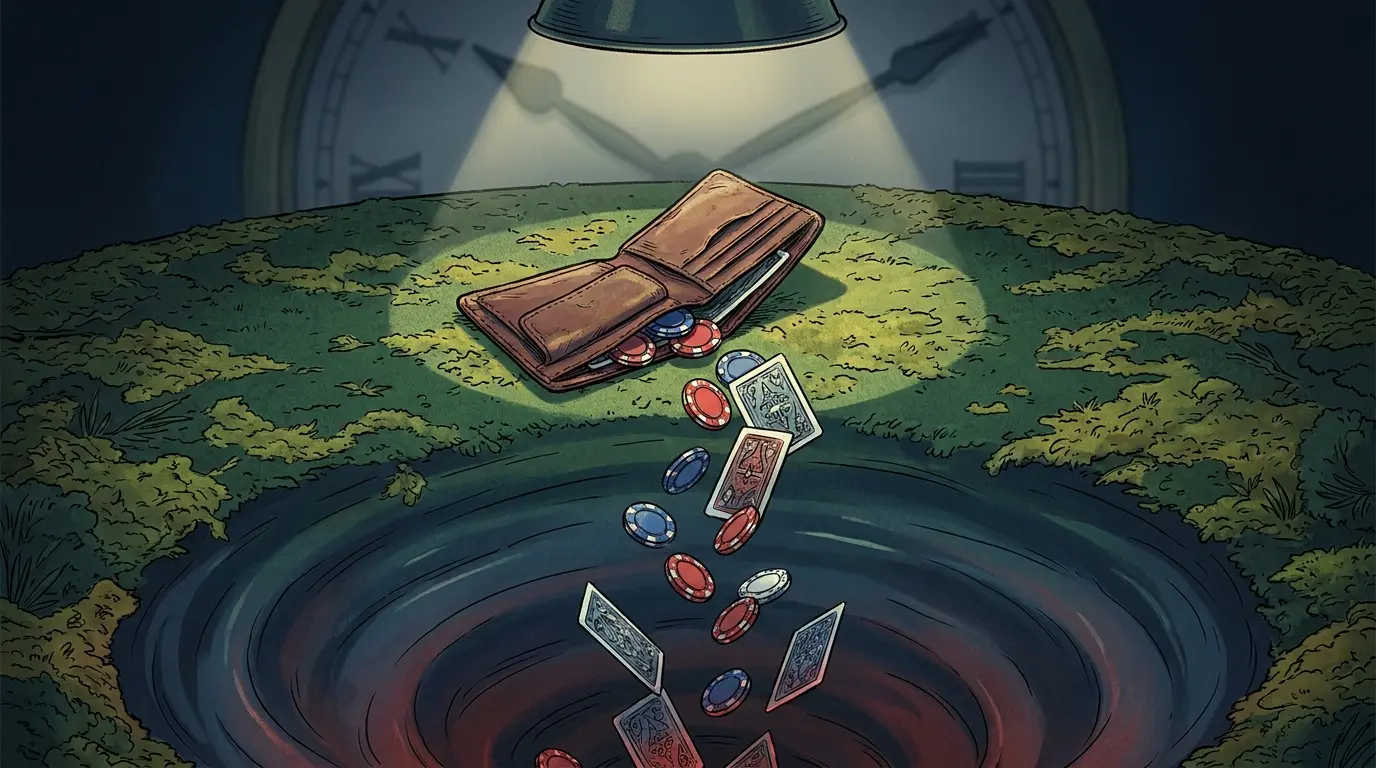
Next, chasing losses takes hold. You're down ₹10,000 and convinced that one good session will square it. So you bet to recover, not to enjoy—and recovery bets are almost always bigger and riskier. This is where bankrolls disappear fastest. I've seen people lose a month's salary in a single night of "just getting even."
Finally, gambling becomes the coping mechanism for stress that gambling itself created. Bad day at work? Bet. Fight at home? Bet. The very thing destroying your life becomes the only thing that quiets the panic. By now it's not a choice anymore—it's a reflex. And reflexes don't respond to willpower. They respond to treatment.
The Emotional Signs People Miss
The financial signs get all the attention, but the emotional signs of problem gambling appear earlier—and they're easier to hide. Watch for these in yourself or someone close:
- Irritability or restlessness when you can't gamble
- Secrecy—going quiet about money, phone hidden, vague about plans
- Mood swings tied directly to wins and losses
- Guilt or self-loathing after a session, followed by doing it again
- Using gambling to escape boredom, loneliness, or stress
- Defensiveness when anyone questions the betting
These don't scream "addiction." They look like a bad mood, a busy week, a private person. That camouflage is exactly why they slip past everyone—including the gambler.
Why Is It So Hard to Just Stop?
"Why don't you just stop?" is the most useless question you can ask a problem gambler—and the most common. The reason it's so hard to stop gambling is that the brain has been chemically rewired to crave it. This isn't a discipline issue.
Each near-miss—two jackpot symbols instead of three—lights up the brain almost as much as a real win. Games are engineered this way deliberately. Add withdrawal-like symptoms of anxiety and agitation when you try to quit, plus the desperate logic of chasing losses, and "just stopping" feels physically impossible. Stopping requires breaking a chemical loop, not finding more willpower.
Is Gambling Becoming a Problem for You?
If you've read this far wondering "is gambling becoming a problem for me," that question itself is worth taking seriously. Casual players rarely ask it. Run through these honestly—you don't have to tell anyone your answers.
- Do you bet more money than you can comfortably afford to lose?
- Have you tried to cut back or stop but couldn't?
- Do you bet to win back money you've lost?
- Have you lied to family or friends about how much you gamble?
- Do you feel restless or irritable when you're not gambling?
- Has gambling caused arguments or strain at home?
- Have you borrowed money or sold anything to fund betting?
- Do you gamble to escape stress, sadness, or boredom?
- Do you think about gambling when you're meant to be working or sleeping?
- Have you ever felt you'd be better off not gambling at all—but kept going?
One or two yeses is a yellow flag worth watching. Three or more is a clear signal to act—this is how to know if you have a gambling problem without needing a clinic to tell you. These questions mirror the screening tools professionals use, and they cut through the denial that keeps people stuck.
Be honest with yourself here. The brain is brilliant at rationalising—"I only do it on weekends," "everyone bets on cricket," "I'll stop once I'm even." If those phrases sound familiar, that's not reassurance. That's the addiction talking.
Steps to Help Someone You Care About
Knowing how to help someone with a gambling addiction is tricky—push too hard and they shut down; ignore it and it worsens. Here's the approach that actually works, based on what I've seen succeed:
- Choose a calm, private moment—never right after a big loss when emotions run hot.
- Talk about specific behaviours you've noticed, not labels. "I'm worried" lands better than "you're an addict."
- Listen without lecturing. Defensiveness is part of the illness, not a personal attack.
- Don't pay off their debts directly—it removes consequences and enables continuation.
- Offer to help them find professional support, and go with them if they'll let you.
- Protect yourself too—set boundaries around money and seek your own support if needed.
You can't force recovery. But you can keep the door open, stay steady, and be there when they're finally ready to walk through it.
Where to Find Real Help in India
Getting help for gambling problems in India is more accessible than it was a decade ago, though stigma still keeps too many people silent. Recovery is absolutely possible—I've seen people rebuild from total financial ruin. The first call is always the hardest.
Here's where to start:
- iCall (TISS): A free psychosocial helpline staffed by trained counsellors—reachable by phone and email, with confidentiality assured.
- Gamblers Anonymous India: Peer support groups running in major cities and online, free to attend. Hearing others' stories breaks the isolation fast.
- NIMHANS, Bengaluru: Offers behavioural addiction treatment and counselling—a strong option for clinical, structured support.
- Vandrevala Foundation: A 24/7 mental health helpline covering crisis support and emotional distress.
- Licensed psychologists: Cognitive behavioural therapy has strong evidence for treating gambling disorder—seek a professional with addiction experience.
- Self-exclusion and deposit limits: Most regulated betting platforms let you block your own access. Use these tools the moment you sense trouble.
At Pokiescheck, we always point readers toward these resources rather than any "quick fix." There's no betting system that beats addiction—only proper support does. Reaching out isn't defeat. It's the smartest bet you'll ever place.
The single insight worth carrying away: problem gambling is about control, not cash. You can spot it long before the money runs out—if you know the emotional signs, the chasing, the secrecy, the rising stakes. That knowledge is protective. Use the ten-question check honestly, and use it again every few months, because patterns shift.
If something here struck a nerve—about yourself or someone you love—don't wait for rock bottom to act. Save one helpline number today. Set a deposit limit before your next session. Talk to one person you trust. Small, early moves prevent the catastrophic ones. And if you want to understand the mechanics behind why these games hook so hard, we cover house edge and game design separately—because understanding the math is part of staying in control.