
What Is Problem Gambling and Where to Get Help?
Walk into any betting kiosk in Accra on a Saturday and you'll see it—men checking their phones every two minutes, topping up MoMo wallets, chasing the one slip that will fix everything. Most of them are fine. Some are not. Knowing the difference is what this guide is about. Problem gambling doesn't announce itself with flashing lights; it creeps in slowly, one borrowed cedi at a time, until rent money becomes stake money and a hobby becomes a hole.
At Pokiescheck, we've spent years studying how betting behaviour shifts from entertainment to compulsion, and the Ghanaian context has its own pressures—youth unemployment, mobile-money convenience, and the social shame that keeps people silent. Here you'll learn what problem gambling actually is, how to spot the warning signs in yourself or a loved one, where to get real help in Ghana, and the practical steps that bring control back.
★ Our Recommendations
| Get 300 Free Spins + 100% up to GH₵2,000 | Play | ||
| Get 100 Free Spins + 125% up to GH₵1,000 | Play | ||
| 100% Welcome Bonus up to GH₵1,000 + 50 Bonus Spins | Play |



What Exactly Is Problem Gambling?
Problem gambling is any betting behaviour that damages your finances, relationships, work, or mental health—yet you keep doing it anyway. That last part matters. It's not about how much you bet. Someone staking GHS 5 daily can be in trouble if they can't stop, while another person dropping GHS 200 on a weekend match may be perfectly fine.
The clinical term is gambling disorder, and it sits in the same category as substance addiction. Your brain releases dopamine when you place a bet, especially when you nearly win. Over time, you need bigger bets or more frequent ones to feel the same rush. That's tolerance—the same mechanism that drives alcohol and drug dependence.
Here's the thing most people miss: problem gambling exists on a spectrum. On one end you have casual, controlled play. On the other, full compulsion where gambling rules every decision. In between sits "at-risk" gambling—where the warning signs are quietly building. Ghana has no shortage of people sitting in that middle zone, convinced they're still in control because they haven't hit rock bottom yet. The truth? You don't have to lose everything before it counts as a problem.
What Causes Compulsive Gambling?
There's rarely one single cause. Compulsive gambling usually grows from a mix of biology, psychology, and environment working together:
- Brain chemistry—some people are simply wired to chase dopamine harder, making the betting reward loop stickier.
- Financial pressure—ironically, the people who can least afford to lose often gamble hardest, hoping for a way out.
- Easy access—mobile money and 24/7 betting apps mean temptation never closes.
- Mental health struggles—depression, anxiety, and stress push people toward gambling as escape.
- Early big wins—a large payout early on rewires expectations and plants the chase.
- Social environment—when friends and family all bet, it normalises risky habits.
How Do You Know If You Have a Gambling Problem?
You're asking yourself the question—that's already a signal worth listening to. People with healthy habits rarely wonder whether they have a gambling problem. Honest self-assessment is how you catch the problem before the damage piles up.
Run through these signs of gambling addiction. The more that apply, the more urgent your situation:
- You bet more money than you planned, almost every time.
- You've tried to cut back or stop and couldn't.
- You chase losses—betting more to win back what you lost.
- You lie to family or friends about how much you gamble.
- You borrow money, sell items, or skip bills to fund betting.
- You feel restless, irritable, or anxious when you can't bet.
- Gambling is the first thing you think about in the morning.
- You've gambled to escape stress, sadness, or loneliness.
- You feel guilt or shame after sessions but return anyway.
- Your work, studies, or relationships are suffering.
Be brutally honest. In our experience, people minimise—"I only chase losses sometimes" usually means "often." If three or more of these ring true, you're past casual play. Five or more, and you're likely dealing with a serious dependence that won't fix itself.
One quick test we recommend: try going two full weeks without placing any bet. If that feels impossible, or you find yourself making excuses to break the streak within days, that resistance tells you everything. The inability to stop—not the amount you lose—is the clearest marker of a problem.
Spotting the Warning Signs Early
Early signs are subtle and easy to explain away. Watch your money first—it leaves the clearest trail. Are you topping up your betting balance more often than last month? Has your MoMo statement become a list of stakes? Money behaviour shifts before everything else does.
Then watch your mood. Catching yourself thinking about odds during work, feeling a buzz when a match kicks off, or getting snappy when you can't place a bet—these are emotional red flags. The dangerous moment is when gambling stops being fun and becomes a need. You'll know it when winning brings relief instead of joy, and losing brings panic instead of a shrug.
How Gambling Addiction Hurts Ghanaian Families
Ask anyone how gambling addiction affects families and they'll point to money first—but the deeper wounds are trust and silence. A father quietly draining the family savings. A young man borrowing from every relative until none will lend again. The financial damage spreads fast through Ghana's tight family networks, where one person's debt becomes everyone's burden.
The emotional toll runs deeper. Spouses live with anxiety and broken promises. Children sense the tension even when nobody explains it. School fees go unpaid, businesses stall, and shame keeps everyone quiet—because admitting a gambling problem still carries heavy stigma here. That silence is the real killer. Families who could pull together instead pretend nothing's wrong until a crisis forces it open. Talking early, without judgment, changes everything.
Steps to Stop Gambling and Regain Control
Stopping starts with accepting one hard truth: willpower alone rarely works. You need structure, barriers, and support. These steps, in order, give you the best chance:
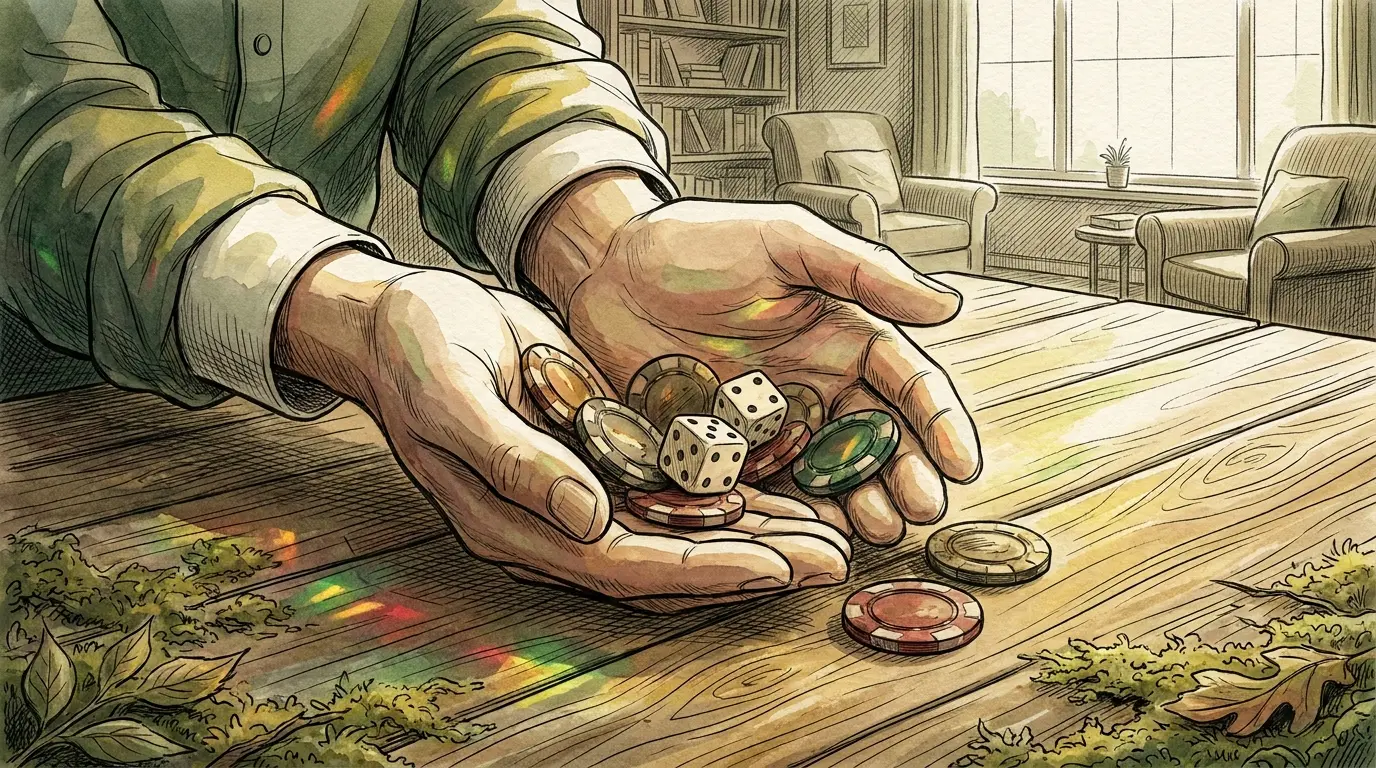
- Admit it fully. Stop calling it "a bit of fun" if it's controlling you. Naming the problem honestly is the foundation everything else builds on.
- Tell someone you trust. Secrecy feeds addiction. One honest conversation with a family member or friend breaks its power and creates accountability.
- Cut off the money supply. Hand control of your finances to someone reliable for a while. Remove saved cards from betting apps. Set MoMo limits if your provider allows.
- Self-exclude from betting platforms. Block yourself from the sites and apps you use—we cover exactly how below.
- Delete the apps and unfollow tipsters. Remove every trigger from your phone. Mute the WhatsApp groups full of betting slips.
- Replace the time. Gambling fills hours. Fill them with something else—sport, a side hustle, church, time with family. Idle time is relapse time.
- Track your money saved. Write down what you would have staked each day. Watching it grow becomes its own reward.
- Get professional help. Counselling and support groups dramatically raise your odds of staying clean. You don't have to do this alone.
- Plan for relapse. Most people slip at least once. A slip isn't failure—not having a plan is. Decide now what you'll do the moment the urge hits hard.
Recovery isn't a straight line. The people who succeed treat it like quitting any addiction—one day at a time, with honest support and real barriers between them and the bet.
How to Self-Exclude From Betting Sites in Ghana
Self-exclusion is a free tool that blocks you from your own account for a set period. Here's how to do it, step by step:
- Find the responsible gambling section. Most licensed Ghanaian operators have it in account settings or the site footer.
- Choose your exclusion length. Options usually range from 24 hours to 6 months, or permanent. Go longer than feels comfortable—short breaks rarely stick.
- Confirm and verify. You'll often need to confirm by email or in-app. Once active, the operator must block your access and stop sending promotions.
- Repeat across every platform. Self-exclusion only covers one operator at a time. List every app and site you use, and exclude from all of them.
- Remove the temptation tools. Uninstall apps and delete bookmarks after excluding. The exclusion handles the account; you handle the habit.
If an operator ignores a self-exclusion request, that's a serious breach—report it to the Gaming Commission of Ghana.
Where to Get Help for Gambling Addiction in Ghana
Finding help here takes a little knowing-where-to-look, because the support network is smaller and less advertised than in some countries. But it exists—and most of it is free or low-cost. The starting points below cover the practical routes most people use.
| Resource | What It Offers | Best For |
|---|---|---|
| Gaming Commission of Ghana | Regulatory body; handles operator complaints and self-exclusion disputes | Reporting unfair operators, exclusion issues |
| Mental health units (Korle Bu, Accra Psychiatric Hospital) | Professional counselling and psychiatric support for behavioural addiction | Severe cases needing clinical help |
| Mental Health Authority helpline | Phone support and referrals to local services | First contact, guidance, referrals |
| Gamblers Anonymous (online groups) | Free peer support meetings via video for those without local groups | Ongoing community and accountability |
| Faith-based & community counsellors | Free pastoral counselling and family mediation | Those who prefer a community setting |
| Private therapists & psychologists | One-on-one therapy for addiction and underlying issues | Those who can afford paid, confidential care |
Start with whatever feels reachable. A hospital mental health unit gives you clinical backing, while an online Gamblers Anonymous meeting gives you people who've been exactly where you are. There's no shame in calling—the people answering have heard it all, and they're there precisely because gambling problems are common and treatable.
Finding Free Counselling and Helplines
You don't need money to start recovery. Free counselling for gambling problems in Ghana is available if you know the channels:
- Government mental health services—public psychiatric units offer subsidised or free counselling for behavioural addiction.
- The Mental Health Authority—provides phone support and can refer you onward.
- Online Gamblers Anonymous—completely free video meetings, available daily, with no registration cost.
- Religious and community groups—many churches and mosques offer free counselling and family support without judgment.
- NGO and youth programmes—some organisations run financial-literacy and addiction-awareness sessions at no charge.
How Can You Support Someone Who Gambles?
Maybe it's not you—it's your brother, your husband, your friend. Supporting them is tricky, because the wrong move pushes them deeper into denial. Here's what actually helps:
- Talk without attacking. Lead with concern, not accusation. "I'm worried about you" lands better than "You're ruining us."
- Don't pay their gambling debts. Bailing them out repeatedly removes consequences and feeds the cycle. Support the person, not the habit.
- Help them access services. Offer to find a counsellor or sit with them during a helpline call. Practical support beats lectures.
- Protect shared finances. If your money is tangled with theirs, separate accounts and secure savings—calmly, not as punishment.
- Set honest boundaries. Make clear what you will and won't tolerate, then hold the line.
- Look after yourself too. Living with someone's addiction is exhausting. Seek support for your own stress.
- Be patient with relapse. Recovery zig-zags. A slip doesn't mean they've failed or that you should give up on them.
You can't force someone to quit—that decision has to be theirs. But you can make recovery easier to reach and enabling harder to continue. Sometimes the most loving thing is to stop rescuing and start steering them toward real help.
Responsible Gambling Habits Worth Building
If you still gamble and want to keep it that way—an occasional bit of fun rather than a trap—build guardrails before you need them. These habits keep betting in its place:
- Set a loss limit before you bet. Decide what you can afford to lose, treat it as spent, and stop when it's gone.
- Never gamble with money you need. Rent, food, school fees, and savings are off-limits—always.
- Set a time limit too. Long sessions blur judgment. A timer keeps you honest.
- Skip the chase. Losses are part of gambling. Trying to win them back is how casual play becomes compulsion.
- Don't bet drunk or upset. Emotion and alcohol wreck decision-making.
- Take regular breaks. Use cooling-off and self-exclusion tools proactively, not just in crisis.
- Keep it social, keep it fun. The moment betting stops feeling like entertainment, step back.
The single most important shift in thinking is this: gambling should cost you money, never control you. The house edge guarantees the operator wins over time—so treat any stake as the price of entertainment, not an investment. If you can't lose comfortably, you can't gamble safely.
Start with one action today. Run an honest self-check, install a deposit limit, or have that conversation you've been avoiding. Recovery and control both begin with a single honest step, not a perfect plan. And if betting has stopped being fun for you or someone you love, reach out to a helpline or counsellor now—Pokiescheck believes the bravest bet anyone can make is asking for help before it's too late. Ghana's support network is small but real, and nobody has to face this alone.